

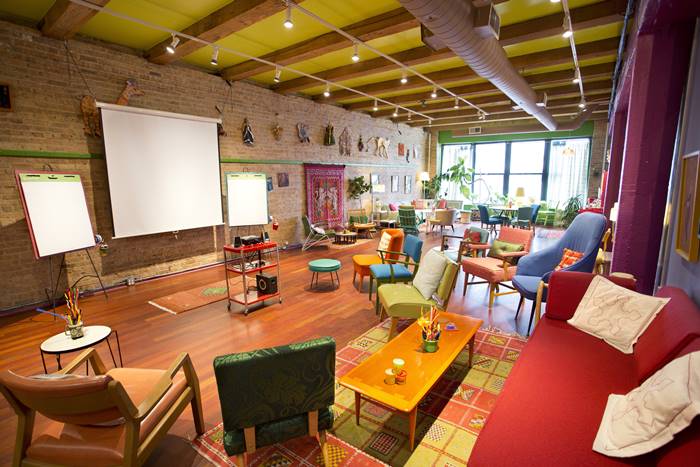
Photo Credit: http://www.catalystranch.com/
If you are planning a conference, meeting or even some indoor team building activities you will need to decide which room layout will work best and enable your delegates to get the most out of the event. There are many different options available so we thought it would be useful to explain the differences, as well as when each layout style would work best.
Theatre Style Layout
 With theatre style seating, chairs are placed in rows just like you would see in a theatre or cinema (although they aren’t usually tiered). If you have a lot of people attending your event, or space in your meeting room is tight, then a theatre layout is likely to be the best option.
Bear in mind that this style of seating isn’t ideal if your delegates want to take lots of notes as they don’t have a surface to lean/write on, and delegates can sometimes feel ‘squashed’ if chairs are placed too close together.
Cabaret Style Layout
 With a cabaret layout, delegates are seated at large tables (usually round or square in shape). There will typically be groups of around 6 delegates on each table and the side facing the projector screen will be left empty so that all of the delegates can see what is being displayed. A cabaret style layout is very popular where groups may be required to work together during the event.
A cabaret style provides delegates with a solid surface to write on during presentations but does take up much more room than a theatre layout. If your event consists of long sessions and will last for an entire day (or longer) then a cabaret layout is a good choice and would provide delegates with plenty of comfort and space. This is also a good layout if you are planning on running team building activities which require some form of a surface for challenges or tasks.
Boardroom Layout
 A boardroom layout consists of a single table that is large enough to seat all delegates around the outside and is most suited to smaller groups where there is likely to be plenty of discussions. The shape of the table does vary from venue to venue but will typically be oval or rectangular.
As delegates will be seated all around the table with this meeting room layout, If presentations will be taking place, a ‘U’ shape layout might be a better option.
Banquet Layout
 As the name suggests, and banquet style layout is used for dining rather than meetings or conferences and will usually be made up of a series of round tables seating between 8 and 10 guests. Unlike a cabaret style where one side of the table is left empty, with a banquet style layout seats are placed around the entire table.
A banquet layout can sometimes be referred to as ‘dinner/dance layout’ depending upon the venue.
U Shape Layout
 A ‘U’ shape layout is perfect for events with smaller groups where there will be plenty of discussion between the delegates and also presentations that people need to be able to see. This layout is also sometimes referred to as a ‘horseshoe’ layout and is created in the shape of a letter ‘U’ with delegates seated along two sides and one end. This leaves one end empty so that all of the delegates can see any presentations being made.
If there won’t be any presentations during your meeting but you still want to facilitate discussion between the delegates, consider a boardroom layout.
Classroom Style Layout
 A Classroom style layout is perfect for training events or meetings where delegates will be taking a lot of notes and will provide attendees with plenty of room to work whilst being able to see presentations and speakers clearly and easily.
A classroom layout is usually created with small rectangular tables with two delegates on each one. Tables will be placed in rows facing the front of the conference or meeting room.
Summary
In summary, there are a variety of options available when it comes to choosing a room layout for your next conference or meeting and which one you choose will ultimately depend on your individual event and what you are looking to achieve. Consider the space you have available in your event space, the presentations (if any) that will be taking place, and what delegates are going to be doing throughout the event.